A History of Diaspora and Adaptation

Mauritian cuisine is a vibrant, soulful reflection of the island’s deeply layered cultural heritage — a living mosaic shaped not only by Indian, Chinese, African, French, and Creole influences, but also by the painful legacies of slavery, indenture, and resilience. Born from centuries of colonization and migration, much of Mauritius’ food culture was forged in conditions of scarcity, where enslaved Africans and later indentured laborers had to create nourishment from limited, often discarded ingredients. Spices were used not just for flavor, but to uplift simple, humble meals. Dishes like rougaille, dholl puri, and fried noodles became not just recipes, but acts of survival and creativity — transforming hardship into culinary art. In every bowl and every bite, you taste the struggle, adaptation, and fusion that define the Mauritian spirit. Today, street food stalls across the island echo those stories — turning everyday meals into celebrations of resilience, memory, and multicultural unity.
Mine Bouille/ Boiled Noodles

"Mine bouilli" (or "minn bouilli" in Creole) is a popular comfort food in Mauritius with roots deeply embedded in the island’s Chinese community. The dish—literally meaning “boiled noodles”—originated from traditional Chinese noodle soups brought by Chinese immigrants who settled in Mauritius in the 19th and 20th centuries, mostly from the Guangdong province.
Over time, the Mauritian version evolved to include a unique Creole twist: it typically features wheat noodles served in a clear, savory broth, topped with finely chopped spring onions, Chinese cabbage, and a choice of meat, seafood, or vegetarian toppings like tofu. Chili sauce, soy sauce, and vinegar are usually offered on the side, so each person can adjust the flavor to their liking.
The Impact
- Cultural Fusion: Mine bouilli is a perfect example of cultural blending in Mauritian cuisine—Chinese in origin but adapted with local ingredients and preferences.
- Everyday Accessibility: It’s a beloved street food, widely available at local eateries and hawker stalls, and affordable to all. Many Mauritians associate it with home-style meals and childhood memories.
- Social Connector: Just like tea or roti, eating mine bouilli is a communal experience—it brings people together across ethnic backgrounds.
- Identity Symbol: It represents the integration of the Sino-Mauritian community into the wider cultural tapestry, contributing to the national identity through food.
Gateaux Frire/ Fried Snacks
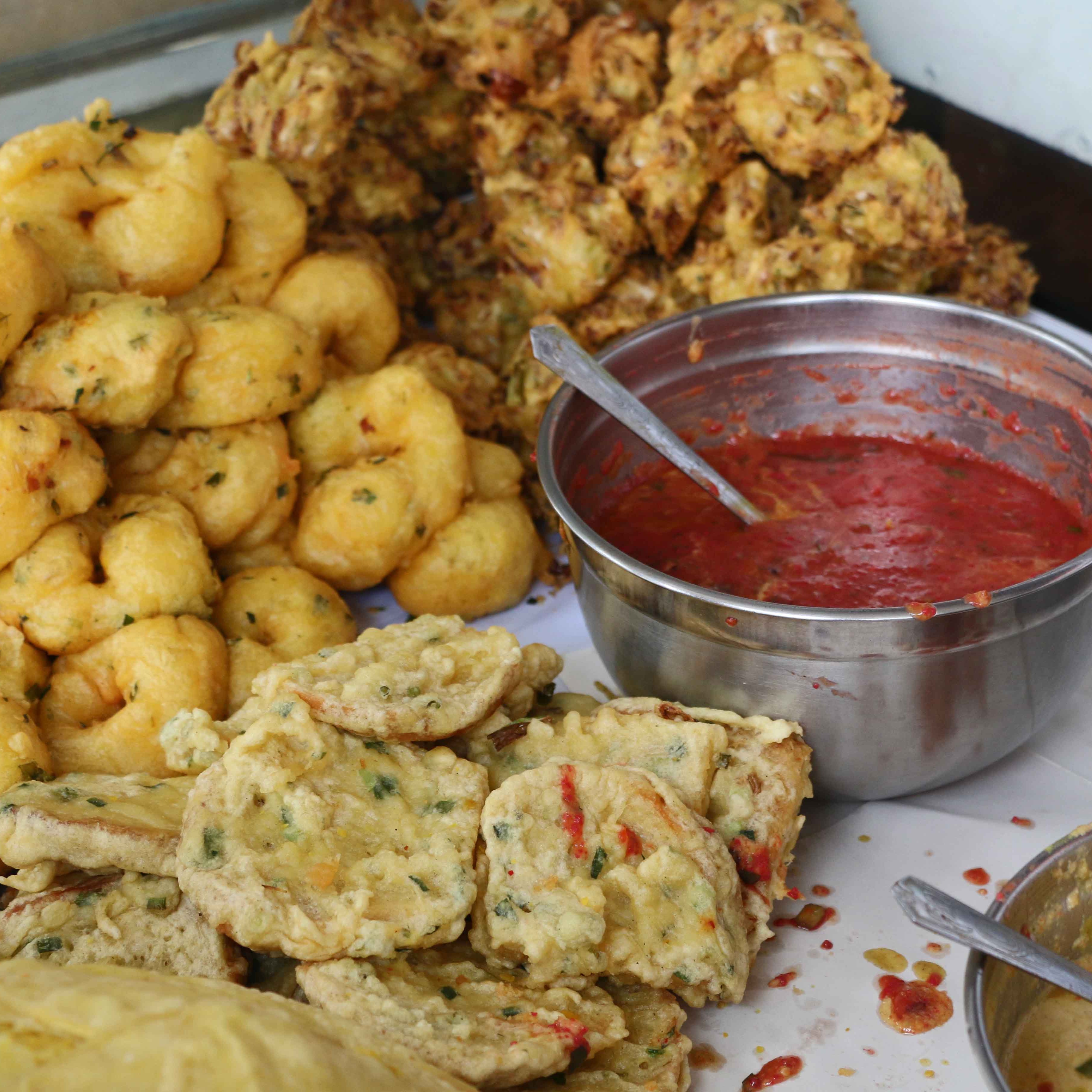
Gateaux pima, samousas, and other fried street snacks are iconic elements of Mauritian cuisine, deeply rooted in the island’s multicultural heritage. Their origins trace back to various communities—especially Indian and Chinese migrants—who adapted their traditional snacks to local tastes and ingredients over generations.
Gateaux Pima/Chilli Cakes

Gâteau pima is a direct descendant of Indian dal vada—specifically from Tamil and Telugu culinary traditions, brought to Mauritius by indentured laborers from South India in the 19th century. However, once on Mauritian soil, these migrants had to adapt to the local environment:
- Yellow split peas (instead of chana dal) became more commonly used.
- The level of spiciness and texture were adjusted to local Creole preferences
- Mauritian herbs like thyme and spring onions were integrated into the mix.
Creole Influence: Over generations, gâteau pima evolved into a national snack — no longer tied to just Indian cuisine but embraced and modified across ethnic groups. It’s a perfect case of culinary creolization — a dish no longer Indian, but distinctly Mauritian.
Samousa

Originally from Persian and Mughal culinary traditions, the samosa traveled through the Indian subcontinent before arriving in Mauritius with indentured workers and traders. But Mauritius transformed the samosa into something new:
In Mauritius, samousas showcase how cross-ethnic culinary borrowing works — a dish rooted in Indo-Islamic tradition, then localised and claimed by all.
The Impact
These beloved fried street snacks are more than just flavorful bites — they are powerful symbols of unity in Mauritius, edible expressions of how diverse cultures can coexist and co-create. Whether it’s gâteau pima, samousas, or boulettes, these foods are part of everyday life across all communities — Hindu, Muslim, Creole, Chinese, or Franco-Mauritian — making them a form of street-side diplomacy, where sharing a snack becomes a shared cultural experience. In each crispy parcel lies a story of cultural preservation and innovation — recipes infused with ancestral memory, yet constantly reinvented by vendors and families, blending tradition with modern flair in a uniquely Mauritian way.
Dholl Puri/Roti
Dholl puri and roti are two of the most iconic and cherished flatbreads in Mauritius — deeply embedded in everyday life and tied to the country’s complex colonial and migratory history. Both are products of adaptation and cultural resilience, rooted in Indian traditions but transformed into uniquely Mauritian street foods.
Dholl Puri

Dholl puri likely originated from Bihari indentured laborers brought to Mauritius by the British in the 19th century. It was adapted from Indian dal puri — a spiced flatbread stuffed with ground lentils. But in Mauritius, it took on a lighter, thinner, and more flexible texture to suit local tastes and cooking conditions.
Mauritian Innovation:
- The lentils (typically yellow split peas) are seasoned mildly, ground finely, and spread thinly within the dough.
- Served as a pair of folded rounds, it is usually filled with curry (gros pois or butter bean curry), rougaille (a Creole tomato sauce), and pickles.
- t became street food — quick, affordable, and deeply comforting — a staple sold by vendors on bikes and at roadside stalls.
Roti

Roti has roots in North Indian cuisine, introduced by Indian laborers as a basic accompaniment to curries. In Mauritius, however, it developed a life of its own:
- It became thinner, oilier, and more portable — perfect for wrapping curries or vegetables for street-style eating.
- Stuffed versions (like roti halim or roti ourite with octopus curry) show the fusion of Indian and Creole flavors.
It’s common to see workers grabbing a roti on the go or schoolchildren buying one during recess. Its versatility and familiarity have made it a national comfort food.
The Impact
Dholl puri and roti are widely regarded as quintessentially Mauritian, transcending ethnic and religious lines to become unifying elements of the island’s food culture. They embody the success of culinary creolization — dishes of Indian origin that have been embraced, adapted, and claimed by all communities. As street food icons, these flatbreads are deeply rooted in daily life, valued for being affordable, filling, and easily found everywhere from bustling city corners to quiet village stalls. Beyond their popularity, they also play a vital economic role — supporting thousands of families who have passed down recipes across generations, turning humble snacks into enduring legacies of pride and livelihood. For many Mauritians, the scent and taste of dholl puri or roti stir an emotional connection to childhood, family gatherings, and cultural continuity — making them far more than food, but symbols of shared identity and memory.